

Why Dubai Construction Companies Choose Bait Al Maha for Prefab
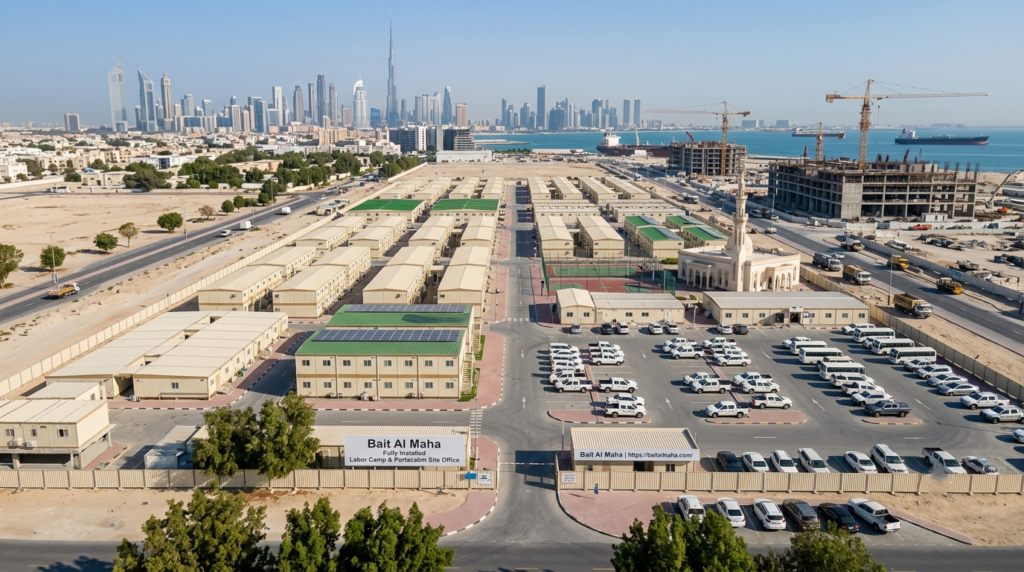
Dubai construction companies choose Bait Al Maha for prefabricated structures because they deliver cost-effective, turnkey solutions that accelerate project timelines. Operating across the Dubai, the manufacturer is highly trusted for supplying robust, custom-built modular units that endure harsh regional climates while meeting rigorous industry standards. The result? Mobilization timelines that are significantly shorter than traditional on-site builds. Based in Sharjah’s Sajja Industrial Area and serving all seven Emirates, Bait Al Maha supplies portacabins, labor camps, site offices, double-storey offices, and container conversions – every unit engineered to withstand UAE summer temperatures that regularly exceed 45°C and frequently reach 50°C. For contractors working under aggressive timelines and strict regulatory environments, that combination is not a luxury – it is a baseline requirement. The Problem Most Contractors Run Into Before They Call Bait Al Maha Picture a scenario that plays out more often than Dubai contractors would care to admit. A 200-worker labor camp is planned for an infrastructure project in Al Quoz. Groundbreaking is in six weeks. The procurement team sourced prefab units from a supplier that looked fine on paper – decent price, decent photos, and a reasonable lead time. Then the units arrive on site. The Dubai Municipality inspector visits. Three things are flagged immediately: Insufficient floor area per worker under UAE accommodation standards Non-compliant electrical earthing No documentation showing fire suppression compliance with Dubai Civil Defence codes The units cannot be occupied. Workers cannot mobilize. The project bleeds money in daily delay costs while the supplier scrambles to address issues they should have anticipated from the first drawing. This is not an exceptional story. It is a pattern – and it emerges directly from one decision: choosing a prefab supplier based on price rather than proven compliance. The contractors who consistently avoid this pattern share one quality: They work with suppliers who understand the UAE regulatory environment as fluently as they understand steel and insulation. Bait Al Maha has built its entire operation around that understanding. This article explains exactly why, with specifics that go well beyond the general claims found on most supplier websites. Why Dubai’s Construction Industry Demands a Different Kind of Prefab Supplier Before examining what Bait Al Maha does, it is worth understanding why Dubai creates prefab demands that simply do not exist in most other markets. The Sheer Pace and Scale of Dubai’s Construction Pipeline The UAE construction market reached USD 42.75 billion in 2025 and is projected to reach USD 52.66 billion by 2030, growing at a CAGR of 4.2% (Mordor Intelligence) Dubai accounts for roughly 41.6% of total UAE construction activity – the single most active emirate in the country Projects currently underway or in the pipeline include: USD 35 billion Al Maktoum Airport expansion – the largest airport project in the world by investment value USD 5.5 billion Dubai Metro Gold Line extension Continuous residential development under the Dubai 2040 Urban Master Plan A steady flow of hospitality, logistics, and industrial construction projects across all zones Every one of these projects needs temporary infrastructure – site offices, labor accommodation, dining facilities, and storage – before a single permanent structure is erected. The prefabricated construction market in the UAE has been growing faster than the broader construction sector: 9.4% CAGR between 2020 and 2024 6.8% annual growth forecast through 2029 Prefab is no longer an alternative approach in the UAE. It is becoming the default method for temporary and increasingly permanent structures where speed, compliance, and cost predictability matter. The Surge-and-Scale Problem What makes Dubai’s prefab market uniquely demanding is what procurement professionals call the surge-and-scale challenge. Projects in Dubai mobilize faster than almost anywhere else in the world. A contractor awarded a major infrastructure contract in January needs accommodation for 300 workers operational by February. There is no gentle ramp-up. There is a project start date, and everything before it is procurement. That urgency creates a very specific requirement – prefab units that are: Already manufactured and ready for dispatch Already compliant with UAE regulatory standards Already equipped with the MEP fittings needed to connect to site services on arrival Off-site manufacturing reduces project timelines by up to 50% compared to conventional builds (IMARC Group). That figure only holds true if the off-site manufacturing is genuinely complete – not simply a shell that requires on-site finishing work to pass an inspection. Worker Welfare Legislation Has Raised the Floor Permanently The UAE government has been progressively strengthening worker welfare regulations for over two decades. Key enforcement points include: The midday outdoor work ban – prohibiting outdoor work under direct sunlight between 12:30 pm and 3:00 pm from June 15 to September 15 – now in its 22nd consecutive year of enforcement Fines for violations: AED 5,000 per worker, up to a maximum of AED 50,000 Under Federal Decree-Law No. 33 of 2021, all companies with 50 or more workers earning below AED 1,500 per month must provide accommodation that meets specific government standards: Requirement Standard Personal space per worker Minimum 3–4 sq m Air conditioning Mandatory in all sleeping areas Room occupancy Maximum 10 workers per room Sanitation ratio 1 toilet + 1 shower per 8–10 workers Prayer facilities Dedicated room required Medical access Clinic within or near the camp These are not aspirational guidelines. They are inspectable, enforceable, and regularly checked by Dubai Municipality and MoHRE inspection teams who conduct field visits using smart digital monitoring systems. The Dual Challenge No One Warns You About The hardest aspect of sourcing prefab specifically for Dubai is that two requirements which rarely co-exist elsewhere must both be satisfied simultaneously: Units must be deployable within days Units must be engineered for one of the harshest climates on the planet Most prefab suppliers around the world can meet one of these requirements. Very few can meet both – with full regulatory compliance – from local stock. That is the gap Bait Al Maha fills. At a Glance: 8 Reasons Construction Companies Choose Bait Al Maha For contractors who need