

Why Dubai Construction Companies Choose Bait Al Maha for Prefab
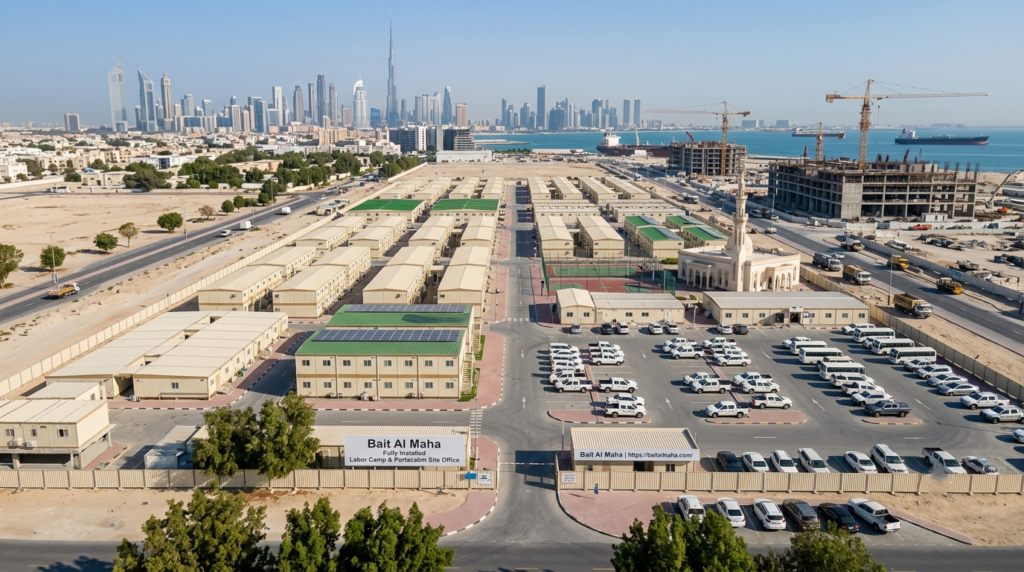
Dubai construction companies choose Bait Al Maha for prefabricated structures because they deliver cost-effective, turnkey solutions that accelerate project timelines. Operating across the Dubai, the manufacturer is highly trusted for supplying robust, custom-built modular units that endure harsh regional climates while meeting rigorous industry standards. The result? Mobilization timelines that are significantly shorter than traditional on-site builds. Based in Sharjah’s Sajja Industrial Area and serving all seven Emirates, Bait Al Maha supplies portacabins, labor camps, site offices, double-storey offices, and container conversions – every unit engineered to withstand UAE summer temperatures that regularly exceed 45°C and frequently reach 50°C. For contractors working under aggressive timelines and strict regulatory environments, that combination is not a luxury – it is a baseline requirement. The Problem Most Contractors Run Into Before They Call Bait Al Maha Picture a scenario that plays out more often than Dubai contractors would care to admit. A 200-worker labor camp is planned for an infrastructure project in Al Quoz. Groundbreaking is in six weeks. The procurement team sourced prefab units from a supplier that looked fine on paper – decent price, decent photos, and a reasonable lead time. Then the units arrive on site. The Dubai Municipality inspector visits. Three things are flagged immediately: Insufficient floor area per worker under UAE accommodation standards Non-compliant electrical earthing No documentation showing fire suppression compliance with Dubai Civil Defence codes The units cannot be occupied. Workers cannot mobilize. The project bleeds money in daily delay costs while the supplier scrambles to address issues they should have anticipated from the first drawing. This is not an exceptional story. It is a pattern – and it emerges directly from one decision: choosing a prefab supplier based on price rather than proven compliance. The contractors who consistently avoid this pattern share one quality: They work with suppliers who understand the UAE regulatory environment as fluently as they understand steel and insulation. Bait Al Maha has built its entire operation around that understanding. This article explains exactly why, with specifics that go well beyond the general claims found on most supplier websites. Why Dubai’s Construction Industry Demands a Different Kind of Prefab Supplier Before examining what Bait Al Maha does, it is worth understanding why Dubai creates prefab demands that simply do not exist in most other markets. The Sheer Pace and Scale of Dubai’s Construction Pipeline The UAE construction market reached USD 42.75 billion in 2025 and is projected to reach USD 52.66 billion by 2030, growing at a CAGR of 4.2% (Mordor Intelligence) Dubai accounts for roughly 41.6% of total UAE construction activity – the single most active emirate in the country Projects currently underway or in the pipeline include: USD 35 billion Al Maktoum Airport expansion – the largest airport project in the world by investment value USD 5.5 billion Dubai Metro Gold Line extension Continuous residential development under the Dubai 2040 Urban Master Plan A steady flow of hospitality, logistics, and industrial construction projects across all zones Every one of these projects needs temporary infrastructure – site offices, labor accommodation, dining facilities, and storage – before a single permanent structure is erected. The prefabricated construction market in the UAE has been growing faster than the broader construction sector: 9.4% CAGR between 2020 and 2024 6.8% annual growth forecast through 2029 Prefab is no longer an alternative approach in the UAE. It is becoming the default method for temporary and increasingly permanent structures where speed, compliance, and cost predictability matter. The Surge-and-Scale Problem What makes Dubai’s prefab market uniquely demanding is what procurement professionals call the surge-and-scale challenge. Projects in Dubai mobilize faster than almost anywhere else in the world. A contractor awarded a major infrastructure contract in January needs accommodation for 300 workers operational by February. There is no gentle ramp-up. There is a project start date, and everything before it is procurement. That urgency creates a very specific requirement – prefab units that are: Already manufactured and ready for dispatch Already compliant with UAE regulatory standards Already equipped with the MEP fittings needed to connect to site services on arrival Off-site manufacturing reduces project timelines by up to 50% compared to conventional builds (IMARC Group). That figure only holds true if the off-site manufacturing is genuinely complete – not simply a shell that requires on-site finishing work to pass an inspection. Worker Welfare Legislation Has Raised the Floor Permanently The UAE government has been progressively strengthening worker welfare regulations for over two decades. Key enforcement points include: The midday outdoor work ban – prohibiting outdoor work under direct sunlight between 12:30 pm and 3:00 pm from June 15 to September 15 – now in its 22nd consecutive year of enforcement Fines for violations: AED 5,000 per worker, up to a maximum of AED 50,000 Under Federal Decree-Law No. 33 of 2021, all companies with 50 or more workers earning below AED 1,500 per month must provide accommodation that meets specific government standards: Requirement Standard Personal space per worker Minimum 3–4 sq m Air conditioning Mandatory in all sleeping areas Room occupancy Maximum 10 workers per room Sanitation ratio 1 toilet + 1 shower per 8–10 workers Prayer facilities Dedicated room required Medical access Clinic within or near the camp These are not aspirational guidelines. They are inspectable, enforceable, and regularly checked by Dubai Municipality and MoHRE inspection teams who conduct field visits using smart digital monitoring systems. The Dual Challenge No One Warns You About The hardest aspect of sourcing prefab specifically for Dubai is that two requirements which rarely co-exist elsewhere must both be satisfied simultaneously: Units must be deployable within days Units must be engineered for one of the harshest climates on the planet Most prefab suppliers around the world can meet one of these requirements. Very few can meet both – with full regulatory compliance – from local stock. That is the gap Bait Al Maha fills. At a Glance: 8 Reasons Construction Companies Choose Bait Al Maha For contractors who need
Porta Cabin Sizes & Dimensions Guide for UAE Projects

Porta cabin sizes and dimensions in the UAE range from 2m × 2m security booths to 3m × 12m (40ft × 10ft) large modular complexes. The two most widely used porta cabin dimensions across UAE projects are the 3m × 6m (20ft × 10ft) for site offices and the 3m × 12m (40ft × 10ft) for labor accommodation. Both are manufactured with 75mm polyurethane (PU) sandwich panel insulation and high-ambient air conditioning to withstand Gulf summer temperatures that regularly exceed 48°C. Three compliance points worth remembering before you order anything: Every habitable cabin needs a minimum of 75mm PU sandwich panel insulation. Every habitable cabin needs a high-ambient, T3-rated split air conditioning unit. Cabins on ADNOC, DEWA, Dubai Municipality, or Abu Dhabi Municipality-regulated sites must meet each authority’s own structural and occupancy rules. A reliable porta cabin manufacturer in UAE will already build to these standards as default practice rather than as a paid upgrade, so it is worth confirming this with any supplier before you sign off on a size. Why Porta Cabin Sizes & Dimensions Matter More in the UAE Than Anywhere Else A procurement manager on a busy Dubai construction site places a porta cabin order. Three weeks later, a Dubai Municipality inspector arrives for a scheduled welfare check, measures the floor area, and flags the cabin as non-compliant. Here is what usually happens next, step by step: The site receives a 48-hour stop-work notice for that block. The contractor scrambles to source a replacement cabin of the correct size. Delivery takes several working days because the right porta cabin dimensions were not in stock. The project timeline slips by almost a full week. The contractor absorbs the rehousing cost, the penalty risk, and the reputational hit with the client. This story repeats across construction sites in Dubai, labor camps in Abu Dhabi, and industrial installations throughout the UAE. The cause is almost always the same: the wrong porta cabin size was chosen, not because nobody cared, but because nobody had the right information before placing the order. Most porta cabin guides online are written for a global audience, and they rarely mention that: A UAE summer renders a 50mm-panel cabin uninhabitable within months. MOHRE sets legally binding minimum floor area requirements per worker. Delivering a 3m × 12m cabin to a JAFZA project site requires a permit that some suppliers never mention upfront. A cabin’s advertised size and its actual usable size can differ by more than two square meters once insulation panels are factored in. This guide closes that gap, and it covers: Every standard porta cabin size available in the UAE, with internal and external dimensions. How panel thickness reduces real usable space, and why this matters more in the UAE than almost anywhere else. The exact regulatory thresholds set by MOHRE, Dubai Municipality, Abu Dhabi Municipality, and ADNOC. Application-specific size recommendations for construction offices, labor camps, oil and gas sites, events, schools, and retail. A five-step sizing decision framework built specifically for UAE project managers. A short FAQ section answering the questions UAE buyers search for most often. This guide is useful whether you: Manage a construction site in Dubai and need a compliant site office. Run a labor camp in Abu Dhabi’s industrial zones. Oversee facilities for an ADNOC contractor. Plan a retail pop-up in Sharjah or anywhere else in the UAE. For projects that need a manufacturer rather than just information, Bait Al Maha has been building porta cabins, prefab houses, and modular site facilities from its Sharjah production base for use across Dubai, Abu Dhabi, and every other emirate. What Is a Porta Cabin? Understanding the Basics Before You Compare Sizes A porta cabin, also written as portacabin or portable cabin, is a prefabricated, relocatable modular structure built from a galvanized steel frame and insulated sandwich panels. It is manufactured off-site and delivered fully or partially assembled to the project location. In the UAE, porta cabins are purpose-built for rapid deployment as: Site offices. Worker accommodation. Welfare facilities such as toilets, prayer rooms, and first-aid rooms. Storage units. Temporary commercial spaces such as kiosks and pop-up shops. A proper UAE-specification porta cabin is not a basic shed, and it is not a converted shipping container left as it is. It is an engineered structure designed to be functional the same day it arrives on site, and built to survive conditions that include: Sustained ambient temperatures above 48°C. Sand-laden winds across desert and coastal construction zones. Humidity levels along the coast that turn a poorly insulated cabin into an unbearable space within hours. How a UAE-Specification Porta Cabin Is Built A standard UAE porta cabin is assembled from six core components. Each one plays a specific role, and each one affects either the internal usable space or the cabin’s ability to survive UAE conditions. Steel frame. Hot-dip galvanized or powder-coated structural steel, typically 2mm gauge for standard units and heavier gauge for ADNOC-spec or two-storey applications. Floor. A steel deck with a polyurethane foam core, finished with vinyl sheeting, anti-slip checker plate, or cement-fibre board depending on use. Walls and roof. Polyurethane (PU) sandwich panels, the single most important component for UAE heat resistance. Panel thickness directly affects usable internal area. Doors and windows. Steel-framed doors with aluminum-framed windows, tinted or frosted glass, and mosquito mesh. Electrical wiring. Pre-wired to UAE standard 240V single-phase or 415V three-phase supply. Air conditioning. A high-ambient split unit rated for Gulf temperatures, since standard domestic units are not adequate here. Manufacturers such as Bait Al Maha produce this full range of cabin types, from security booths to multi-room labour accommodation blocks, with these UAE-specific build standards applied as standard rather than as an extra cost. Porta Cabin vs. Shipping Container vs. Modular Building: What Is the Difference? Feature Porta Cabin Shipping Container Modular Building Structure Steel frame plus PU sandwich panels Repurposed or new Corten steel container Engineered prefab modules with full fit-out Customization High Low to medium Very high UAE Climate
Consultant Cabin vs Contractor Cabin: Key Differences

A consultant cabin is a professional-grade, temporary site office used by project consultants, engineers, architects, and quality inspectors for planning, compliance oversight, and client-facing work. A contractor cabin is a functional, operations-grade temporary structure used by the contractor’s site team for daily execution management, labor coordination, and on-site workflow control. The real difference between a consultant cabin and a contractor cabin comes down to two things: The consultant cabin supports the people who plan and oversee the project. The contractor cabin supports the people who build and deliver it. Two Cabins, Two Worlds on the Same Site Walk onto any mid-to-large construction project in the UAE and you will typically find two distinct types of temporary cabins before you even reach the actual building work. One sits near the entrance, looks professionally fitted out, and carries a quiet, controlled atmosphere where people review drawings, take calls with clients, and manage documentation. The other is positioned closer to the action – busier, louder, filled with shift registers, notice boards, and the organized rhythm of daily site operations. These are the consultant cabin and the contractor cabin. Despite being physically similar structures made from the same basic materials, they serve completely different purposes and represent two entirely different positions in the construction project hierarchy. Yet procurement teams, junior engineers, and even experienced project managers regularly confuse the two. Common mistakes that happen when the two cabins are confused: Specifying the wrong fitout for the wrong team. Placing the cabin in the wrong location on the site plan. Expecting one structure to serve both functions on a project that genuinely needs both. Misallocating the procurement budget between the two cabin types. The result is predictable: Misallocated budgets spent on the wrong cabin specification. Operational friction between consulting and contracting teams sharing inadequate space. A breakdown in the professional separation that keeps large projects running with clarity. Contractual complications when the consultant’s accommodation does not meet the agreed standard. This guide breaks down every meaningful difference between a consultant cabin vs contractor cabin – what each one is, why they exist the way they do, what goes inside them, where they sit on a project site, who pays for them, and how they work together throughout the project lifecycle. Whether you are mobilizing a residential site in Sharjah or a large infrastructure project in Dubai, getting this decision right at the procurement stage saves time, money, and a great deal of friction later on. If you are still finalizing your site cabin requirements, the team at Bait Al Maha regularly helps project managers across the UAE work through exactly this kind of decision before mobilization begins. What Is a Consultant Cabin? A consultant cabin is a portable, prefabricated, professional-grade temporary office structure deployed on construction or infrastructure project sites for use by consultants, Project Management Consultants (PMCs), quality engineers, architects, and client representatives. It serves as the strategic command center of the project, where: Planning decisions are made. Compliance is monitored. Client communications are managed. Quality standards are enforced. Think of it as the brain room of the project. Everything that determines whether the project is being built correctly either happens inside this cabin or passes through it. Who Uses a Consultant Cabin? The consultant cabin is not a shared facility for everyone on site. It is a dedicated workspace for a specific group of professionals, each of whom represents either the client’s interests or an independent oversight function. The primary occupants of a consultant cabin include: Project Management Consultants (PMC) – the firm engaged by the client to manage, supervise, and coordinate the overall project, advising on every matter from design intent to final compliance. Resident Engineers and Site Engineers – the technical professionals from the consulting firm who physically visit the site, conduct inspections, and approve or reject construction activities. Architects and Structural Design Reviewers – responsible for ensuring the physical construction matches the approved design intent. Quality Assurance and Quality Control (QA/QC) Inspectors – independent professionals who verify workmanship and material quality. Client Representatives and Owner’s Project Managers – the client’s own eyes on the project. Third-party Safety and Compliance Auditors – visiting professionals who assess HSE compliance. When Is a Consultant Cabin Set Up on Site? The consultant cabin is typically deployed in the pre-construction or early mobilization phase, and this timing is one of its most distinctive characteristics. Pre-construction tasks that require the consultant cabin to be ready early: Reviewing and issuing the Approved-for-Construction (AFC) drawing set. Finalizing Inspection and Test Plans (ITPs) for all major construction activities. Conducting the pre-construction baseline survey and photographic record. Hosting the pre-construction meeting with the contractor and client. Setting up the document management system and correspondence register. Approving the contractor’s Method Statements before any work begins. Once established, the consultant cabin remains operational throughout the entire project lifecycle: Pre-construction phase. Active construction phase. Practical Completion Certificate issuance. Defects Liability Period, on many formally contracted projects. Key Physical Features of a Consultant Cabin Understanding what a consultant cabin looks like inside and out matters because these specifications directly affect how the cabin performs through a long, hot UAE construction season. Size and footprint: Small teams (2–4 professionals): 10×20 ft unit, around 18–20 sq. m. Medium PMC operations (5–8 professionals): 20×30 ft unit or two linked cabin modules. Large infrastructure projects (10+ professionals): 20×40 ft complex or a multi-room cabin compound. Structure and materials: Prefabricated galvanized steel or aluminum structural frame. Insulated sandwich panel walls and roof, using EPS or PUF core for thermal performance against UAE summer heat. Corrosion-resistant exterior cladding suitable for coastal and desert site conditions. Leveling pedestals or a concrete plinth base for a stable, level installation. Interior specifications: Vinyl or ceramic tile flooring, cleanable and professionally presentable. Suspended false ceiling for a finished, formal appearance. Internal partition walls creating distinct zones. Individual workstations with ergonomic chairs. A dedicated drawing review table with adequate lighting. Lockable steel document storage cabinets. A presentation screen or projector and whiteboard
Porta Cabin Export from Dubai: What Every Buyer Needs to Know Before Placing an Order

Exporting a porta cabin from Dubai requires four things to go right before production even starts: the correct destination-specific specifications, the full set of export documents, the right freight method for your order size, and a clear picture of your total landed cost – not just the ex-works unit price. Buyers who lock these four things in before signing a purchase order avoid the cost overruns, customs holds, and delivery delays that derail most first-time cross-border prefab purchases. Buyers who leave them for later pay for it in rework, demurrage charges, and blown project timelines. Dubai is not simply a convenient source for prefabricated porta cabins. For buyers across the GCC, East Africa, South Asia, and Central Asia, it is the most practical and cost-competitive source in the world. The combination of extreme-climate engineering standards, world-class port infrastructure at Jebel Ali, a growing network of trade agreements, and a highly competitive porta cabin manufacturing sector makes Dubai the reference point that serious procurement teams use when sourcing modular structures for international deployment. This guide gives you the full picture – from choosing the right cabin type and locking in specifications, through the export documentation sequence and freight method selection, to total landed cost modelling and destination-specific compliance requirements. Why Dubai Is the Right Source for Porta Cabin Export Before getting into specifications and shipping documents, it is worth understanding why porta cabin export from Dubai keeps coming up as the right answer for buyers from Lagos to Lahore and from Colombo to Almaty. Dubai-Built Cabins Are Over-Engineered by Default Dubai’s summer temperatures routinely hit 48°C to 50°C, with humidity levels that corrode an under-specified steel frame within a single wet season. Every prefab cabin manufactured in Dubai for the local market must survive this environment as a design baseline. That engineering standard does not get downgraded when the same cabin is destined for export. What this means for a buyer: A cabin built to withstand Dubai’s heat and UV intensity is already over-specified for most export destinations. The insulation, frame construction, and surface coatings that Dubai’s climate demands will outperform locally made alternatives across East African construction sites, South Asian labour camps, and high-altitude Central Asian installations. Buyers sourcing from manufacturers in more temperate climates often find the quality gap only after delivery – when insulation is failing or steel shows early corrosion. With Dubai-origin porta cabins, the buyer starts from a stronger engineering baseline than almost any competing source market. The Jebel Ali Port Advantage Jebel Ali Port processed 15.5 million TEUs in 2024 – its highest throughput since 2015 – with breakbulk cargo surging 23% year-on-year to reach 5.4 million metric tonnes. The port connects to over 150 ports globally through more than 180 shipping lines. The Jebel Ali Free Zone (JAFZA) recorded AED 713 billion in non-oil trade in 2024, a 15% increase from the previous year, and is home to over 11,000 companies from 157 countries. For a porta cabin export buyer, this port infrastructure translates into three direct advantages: Regular vessel services to virtually every destination port in the world, with no need for the costly transhipment delays common on less connected routes. Specialist breakbulk and flat rack handling facilities built to accommodate oversized and non-standard modular structures. A freight forwarding ecosystem with documented experience handling every category of project cargo, from structural steel to prefabricated camp complexes. Exporting from Jebel Ali is not improvising. It is using the most sophisticated export infrastructure in the Middle East. Faster Lead Times with Quality You Can Verify Directly When sourcing from China or India – both legitimate alternatives – buyers regularly face: Lead times of 12 to 16 weeks for custom porta cabins. Quality inspection challenges requiring third-party agents on the ground. Communication friction around mid-production specification changes. Dubai-based porta cabin manufacturers, operating in English-first business environments with factories accessible for direct inspection, typically deliver custom units in three to six weeks. A buyer can fly to Dubai, walk through the production floor, and catch a specification issue before it becomes a shipping problem. That accessibility has real cost implications on large orders. UAE Trade Agreements That Directly Reduce Your Import Duty Since 2022, the UAE has concluded Comprehensive Economic Partnership Agreements (CEPAs) with over 27 countries and trading blocs, including: India: UAE exports to India grew 75% in the two years following the CEPA, which came into force in May 2022. Indonesia: Targets bilateral non-oil trade growth from USD 4.08 billion to USD 10 billion. Turkey: Eliminates or reduces customs duties on 82% of traded goods. These agreements increasingly cover manufactured goods, including prefabricated buildings under HS code 9406.10. For buyers in CEPA-partner countries, this directly reduces the import duty on your porta cabin shipment compared to sourcing from non-CEPA countries. Check with your destination country’s customs authority whether UAE-origin prefabricated structures qualify for preferential tariff treatment before finalising your procurement decision. What Type of Porta Cabin Are You Exporting? Start Here. Most buyers approach a supplier with a budget figure and a vague description of what they need. The problem is that the cabin type, its intended use, and the order quantity each determine a completely different procurement and logistics strategy. Getting clear on these three variables before speaking to a manufacturer is the single most effective way to avoid ordering the wrong product at the wrong price. Porta Cabin Types and Their Export Implications The cabin’s purpose determines its specifications. Its specifications determine how it must be packaged, shipped, and documented. Here is how the main categories break down for porta cabin export from Dubai: Site Office Cabins The most commonly exported cabin type from Dubai. Require a complete electrical fit-out: lighting circuits, power points, and air conditioning provision. Destination voltage and frequency must be confirmed before production – one of the most consequential details in any export order. Standard 6m × 3m or 12m × 3m dimensions typically require flat rack container shipping. Labour Accommodation Cabins Typically ordered in volume: 20
Affordable Refurbished Portacabin in Dubai: Quality Used Options for Offices & More

Refurbished portacabins provide a highly cost-effective, durable, and rapid structural solution for businesses in Dubai needing immediate office spaces, labor accommodations, or security booths. By opting for pre-owned, professionally reconditioned units, companies can save significantly on material and labor expenses without sacrificing weather resistance, aesthetic design, or compliance with local structural safety guidelines. What Is an Affordable Refurbished Portacabin in Dubai? An affordable refurbished portacabin in Dubai is a previously owned portable cabin that has been professionally restored – inspected, structurally repaired, rewired, repainted, and upgraded – to near-new operating condition. It is available at 40 to 60 percent below the cost of a brand-new unit, making it the most financially efficient space solution for contractors, businesses, and project teams across Dubai and the UAE. Key facts at a glance: Price Range AED 8,000 to AED 40,000, depending on size, condition, and specification. Delivery Time Most units ready within 48 to 72 hours across Dubai, Sharjah, and Abu Dhabi. Customization Plumbing, electrical rewiring, HVAC, interior partitions, kitchenettes, ablution blocks, and branded finishes. Applications Site offices, labour camps, guard rooms, storage units, pop-up retail, events, and mobile clinics. Compliance Units fully configurable to meet Dubai Municipality and UAE Worker Welfare standards. Why Dubai Businesses Are Searching for Affordable Refurbished Portacabins Right Now Picture this. Your construction contract is signed. Your crew is on site. Equipment is rolling in. But your site office portacabin in Dubai is still three weeks away from delivery – and five figures over your initial budget. This is not a hypothetical. It is the real, recurring frustration that hundreds of contractors and project managers face in Dubai every year. The city’s construction calendar does not pause. And when mobilisation day arrives, you need a functional, compliant workspace – not a promise. This is precisely why affordable used portacabins for sale in Dubai have become one of the most searched-for solutions across the construction, industrial, hospitality, and events sectors in the UAE. Here is what makes Dubai’s demand for refurbished portacabins so consistent: The Dubai 2040 Urban Master Plan projects the emirate’s population growing from 3.3 million to 5.8 million by 2040 – requiring sustained, high-volume construction across residential, commercial, and infrastructure sectors. Every active project site needs enclosed, climate-controlled working space from day one. Outdoor summer temperatures regularly exceed 45°C, making an air-conditioned enclosed workspace a fundamental operational requirement, not a luxury. UAE worker welfare regulations legally require compliant accommodation infrastructure for companies housing 50 or more workers. New portacabins require 3 to 8 weeks of manufacturing lead time – a delay most project timelines cannot absorb. A quality refurbished portacabin delivered within 48 to 72 hours – fitted with insulated sandwich panels, a functioning split AC, and configured to your specific layout – solves every one of those problems at a cost your budget can absorb. This guide covers everything a smart buyer needs to know, including: What “refurbished” actually means – and why the definition protects your money. Real AED cost numbers for the Dubai portacabin market. A complete applications breakdown by industry. A step-by-step buyer’s inspection checklist. Portacabin sizing and specifications for Dubai requirements. The straight-talking comparison between buying and renting. Delivery, site preparation, and permit guidance specific to Dubai. What Does “Refurbished Portacabin” Actually Mean? (And Why It Matters in Dubai) A refurbished portacabin is a previously owned portable cabin structure that has gone through a documented, professional restoration process – covering structural integrity, electrical systems, plumbing, insulation, climate control, and cosmetic finishes – to bring it to a standard that performs like a new unit at a fraction of the price. This definition matters more than most buyers realise. The Dubai and UAE market uses “used,” “second-hand,” and “refurbished” interchangeably – and buyers who treat these terms as equivalent consistently end up with units that fail at the worst possible moment. Used vs. Second-Hand vs. Refurbished: The Difference That Protects Your Money Term What It Means Condition on Delivery Price Range Used Sold as-is. No restoration done. Exactly as the previous owner left it. Lowest. Second-hand Previously owned. Minor cleaning or light touch-up only. Cosmetic only – underlying systems untouched. Low. Refurbished Professionally restored through a documented process. Structurally inspected, systems upgraded, and certified. Mid-range – best overall value. When you purchase a “used” portacabin without proper refurbishment, you inherit: Hidden rust in the steel base channel and corner posts. Delaminated insulation panels that have lost thermal performance. An unserviced AC unit struggling against Dubai’s summer heat. Outdated or unchecked electrical wiring – a direct fire risk. Plumbing joints that leak weeks after delivery. A properly refurbished unit has already had every one of those problems identified and fixed before it reached your site. The 8-Step Refurbishment Process: What Must Happen Before a Unit Is Genuinely “Refurbished” Every unit sold through Bait Al Maha’s professional refurbishment service goes through a fully documented restoration. Here is what a credible refurbishment involves: Structural frame inspection. The steel base channel, corner posts, floor joists, and roof frame are checked for rust penetration, cracking, deformation, and weld integrity. Units with structural-depth corrosion are rejected outright. Rust treatment and anti-corrosion primer. All steel surfaces are sandblasted or wire-brushed, treated with a rust converter, and coated with an anti-corrosion primer before any topcoat is applied. In Dubai’s coastal humidity and heat, this step is non-negotiable. Full electrical overhaul. The entire wiring circuit is assessed and replaced to UAE 240V standard where needed. All sockets, switches, and circuit breakers are individually tested under load. Earth leakage protection is confirmed operational. Plumbing assessment and repair. All pipe joints are inspected for evidence of past leaks, water pressure is tested end-to-end, and fixtures are replaced as required. HVAC service or full replacement. The AC unit is serviced — filters cleaned, refrigerant recharged, compressor performance tested. Units where the AC cannot be reliably serviced receive a full replacement unit. Interior restoration. Flooring is replaced where damaged or worn. Wall panels are checked for delamination, damp staining, and mould.