

Why Dubai Construction Companies Choose Bait Al Maha for Prefab
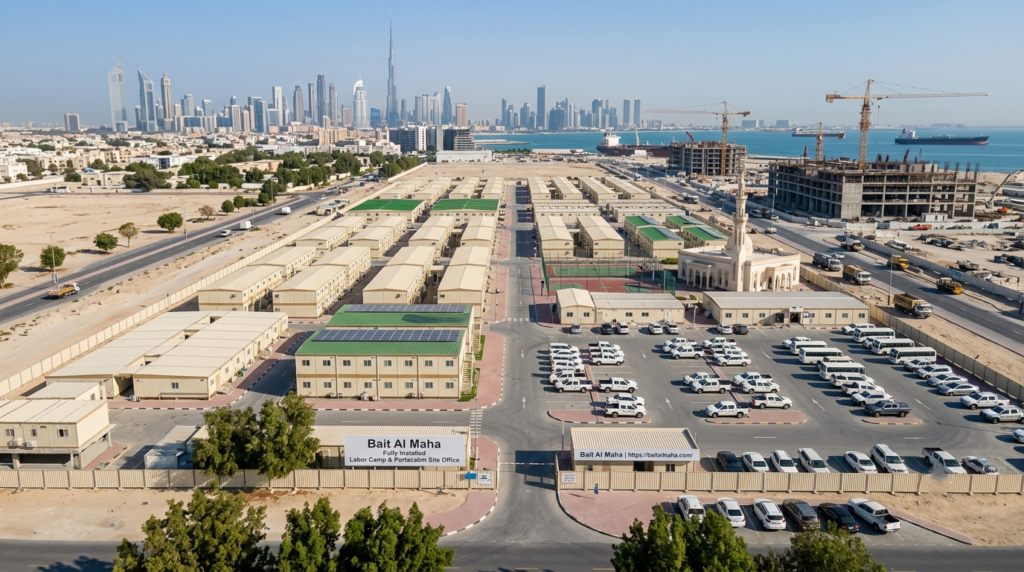
Dubai construction companies choose Bait Al Maha for prefabricated structures because they deliver cost-effective, turnkey solutions that accelerate project timelines. Operating across the Dubai, the manufacturer is highly trusted for supplying robust, custom-built modular units that endure harsh regional climates while meeting rigorous industry standards. The result? Mobilization timelines that are significantly shorter than traditional on-site builds. Based in Sharjah’s Sajja Industrial Area and serving all seven Emirates, Bait Al Maha supplies portacabins, labor camps, site offices, double-storey offices, and container conversions – every unit engineered to withstand UAE summer temperatures that regularly exceed 45°C and frequently reach 50°C. For contractors working under aggressive timelines and strict regulatory environments, that combination is not a luxury – it is a baseline requirement. The Problem Most Contractors Run Into Before They Call Bait Al Maha Picture a scenario that plays out more often than Dubai contractors would care to admit. A 200-worker labor camp is planned for an infrastructure project in Al Quoz. Groundbreaking is in six weeks. The procurement team sourced prefab units from a supplier that looked fine on paper – decent price, decent photos, and a reasonable lead time. Then the units arrive on site. The Dubai Municipality inspector visits. Three things are flagged immediately: Insufficient floor area per worker under UAE accommodation standards Non-compliant electrical earthing No documentation showing fire suppression compliance with Dubai Civil Defence codes The units cannot be occupied. Workers cannot mobilize. The project bleeds money in daily delay costs while the supplier scrambles to address issues they should have anticipated from the first drawing. This is not an exceptional story. It is a pattern – and it emerges directly from one decision: choosing a prefab supplier based on price rather than proven compliance. The contractors who consistently avoid this pattern share one quality: They work with suppliers who understand the UAE regulatory environment as fluently as they understand steel and insulation. Bait Al Maha has built its entire operation around that understanding. This article explains exactly why, with specifics that go well beyond the general claims found on most supplier websites. Why Dubai’s Construction Industry Demands a Different Kind of Prefab Supplier Before examining what Bait Al Maha does, it is worth understanding why Dubai creates prefab demands that simply do not exist in most other markets. The Sheer Pace and Scale of Dubai’s Construction Pipeline The UAE construction market reached USD 42.75 billion in 2025 and is projected to reach USD 52.66 billion by 2030, growing at a CAGR of 4.2% (Mordor Intelligence) Dubai accounts for roughly 41.6% of total UAE construction activity – the single most active emirate in the country Projects currently underway or in the pipeline include: USD 35 billion Al Maktoum Airport expansion – the largest airport project in the world by investment value USD 5.5 billion Dubai Metro Gold Line extension Continuous residential development under the Dubai 2040 Urban Master Plan A steady flow of hospitality, logistics, and industrial construction projects across all zones Every one of these projects needs temporary infrastructure – site offices, labor accommodation, dining facilities, and storage – before a single permanent structure is erected. The prefabricated construction market in the UAE has been growing faster than the broader construction sector: 9.4% CAGR between 2020 and 2024 6.8% annual growth forecast through 2029 Prefab is no longer an alternative approach in the UAE. It is becoming the default method for temporary and increasingly permanent structures where speed, compliance, and cost predictability matter. The Surge-and-Scale Problem What makes Dubai’s prefab market uniquely demanding is what procurement professionals call the surge-and-scale challenge. Projects in Dubai mobilize faster than almost anywhere else in the world. A contractor awarded a major infrastructure contract in January needs accommodation for 300 workers operational by February. There is no gentle ramp-up. There is a project start date, and everything before it is procurement. That urgency creates a very specific requirement – prefab units that are: Already manufactured and ready for dispatch Already compliant with UAE regulatory standards Already equipped with the MEP fittings needed to connect to site services on arrival Off-site manufacturing reduces project timelines by up to 50% compared to conventional builds (IMARC Group). That figure only holds true if the off-site manufacturing is genuinely complete – not simply a shell that requires on-site finishing work to pass an inspection. Worker Welfare Legislation Has Raised the Floor Permanently The UAE government has been progressively strengthening worker welfare regulations for over two decades. Key enforcement points include: The midday outdoor work ban – prohibiting outdoor work under direct sunlight between 12:30 pm and 3:00 pm from June 15 to September 15 – now in its 22nd consecutive year of enforcement Fines for violations: AED 5,000 per worker, up to a maximum of AED 50,000 Under Federal Decree-Law No. 33 of 2021, all companies with 50 or more workers earning below AED 1,500 per month must provide accommodation that meets specific government standards: Requirement Standard Personal space per worker Minimum 3–4 sq m Air conditioning Mandatory in all sleeping areas Room occupancy Maximum 10 workers per room Sanitation ratio 1 toilet + 1 shower per 8–10 workers Prayer facilities Dedicated room required Medical access Clinic within or near the camp These are not aspirational guidelines. They are inspectable, enforceable, and regularly checked by Dubai Municipality and MoHRE inspection teams who conduct field visits using smart digital monitoring systems. The Dual Challenge No One Warns You About The hardest aspect of sourcing prefab specifically for Dubai is that two requirements which rarely co-exist elsewhere must both be satisfied simultaneously: Units must be deployable within days Units must be engineered for one of the harshest climates on the planet Most prefab suppliers around the world can meet one of these requirements. Very few can meet both – with full regulatory compliance – from local stock. That is the gap Bait Al Maha fills. At a Glance: 8 Reasons Construction Companies Choose Bait Al Maha For contractors who need
Porta Cabin Sizes & Dimensions Guide for UAE Projects

Porta cabin sizes and dimensions in the UAE range from 2m × 2m security booths to 3m × 12m (40ft × 10ft) large modular complexes. The two most widely used porta cabin dimensions across UAE projects are the 3m × 6m (20ft × 10ft) for site offices and the 3m × 12m (40ft × 10ft) for labor accommodation. Both are manufactured with 75mm polyurethane (PU) sandwich panel insulation and high-ambient air conditioning to withstand Gulf summer temperatures that regularly exceed 48°C. Three compliance points worth remembering before you order anything: Every habitable cabin needs a minimum of 75mm PU sandwich panel insulation. Every habitable cabin needs a high-ambient, T3-rated split air conditioning unit. Cabins on ADNOC, DEWA, Dubai Municipality, or Abu Dhabi Municipality-regulated sites must meet each authority’s own structural and occupancy rules. A reliable porta cabin manufacturer in UAE will already build to these standards as default practice rather than as a paid upgrade, so it is worth confirming this with any supplier before you sign off on a size. Why Porta Cabin Sizes & Dimensions Matter More in the UAE Than Anywhere Else A procurement manager on a busy Dubai construction site places a porta cabin order. Three weeks later, a Dubai Municipality inspector arrives for a scheduled welfare check, measures the floor area, and flags the cabin as non-compliant. Here is what usually happens next, step by step: The site receives a 48-hour stop-work notice for that block. The contractor scrambles to source a replacement cabin of the correct size. Delivery takes several working days because the right porta cabin dimensions were not in stock. The project timeline slips by almost a full week. The contractor absorbs the rehousing cost, the penalty risk, and the reputational hit with the client. This story repeats across construction sites in Dubai, labor camps in Abu Dhabi, and industrial installations throughout the UAE. The cause is almost always the same: the wrong porta cabin size was chosen, not because nobody cared, but because nobody had the right information before placing the order. Most porta cabin guides online are written for a global audience, and they rarely mention that: A UAE summer renders a 50mm-panel cabin uninhabitable within months. MOHRE sets legally binding minimum floor area requirements per worker. Delivering a 3m × 12m cabin to a JAFZA project site requires a permit that some suppliers never mention upfront. A cabin’s advertised size and its actual usable size can differ by more than two square meters once insulation panels are factored in. This guide closes that gap, and it covers: Every standard porta cabin size available in the UAE, with internal and external dimensions. How panel thickness reduces real usable space, and why this matters more in the UAE than almost anywhere else. The exact regulatory thresholds set by MOHRE, Dubai Municipality, Abu Dhabi Municipality, and ADNOC. Application-specific size recommendations for construction offices, labor camps, oil and gas sites, events, schools, and retail. A five-step sizing decision framework built specifically for UAE project managers. A short FAQ section answering the questions UAE buyers search for most often. This guide is useful whether you: Manage a construction site in Dubai and need a compliant site office. Run a labor camp in Abu Dhabi’s industrial zones. Oversee facilities for an ADNOC contractor. Plan a retail pop-up in Sharjah or anywhere else in the UAE. For projects that need a manufacturer rather than just information, Bait Al Maha has been building porta cabins, prefab houses, and modular site facilities from its Sharjah production base for use across Dubai, Abu Dhabi, and every other emirate. What Is a Porta Cabin? Understanding the Basics Before You Compare Sizes A porta cabin, also written as portacabin or portable cabin, is a prefabricated, relocatable modular structure built from a galvanized steel frame and insulated sandwich panels. It is manufactured off-site and delivered fully or partially assembled to the project location. In the UAE, porta cabins are purpose-built for rapid deployment as: Site offices. Worker accommodation. Welfare facilities such as toilets, prayer rooms, and first-aid rooms. Storage units. Temporary commercial spaces such as kiosks and pop-up shops. A proper UAE-specification porta cabin is not a basic shed, and it is not a converted shipping container left as it is. It is an engineered structure designed to be functional the same day it arrives on site, and built to survive conditions that include: Sustained ambient temperatures above 48°C. Sand-laden winds across desert and coastal construction zones. Humidity levels along the coast that turn a poorly insulated cabin into an unbearable space within hours. How a UAE-Specification Porta Cabin Is Built A standard UAE porta cabin is assembled from six core components. Each one plays a specific role, and each one affects either the internal usable space or the cabin’s ability to survive UAE conditions. Steel frame. Hot-dip galvanized or powder-coated structural steel, typically 2mm gauge for standard units and heavier gauge for ADNOC-spec or two-storey applications. Floor. A steel deck with a polyurethane foam core, finished with vinyl sheeting, anti-slip checker plate, or cement-fibre board depending on use. Walls and roof. Polyurethane (PU) sandwich panels, the single most important component for UAE heat resistance. Panel thickness directly affects usable internal area. Doors and windows. Steel-framed doors with aluminum-framed windows, tinted or frosted glass, and mosquito mesh. Electrical wiring. Pre-wired to UAE standard 240V single-phase or 415V three-phase supply. Air conditioning. A high-ambient split unit rated for Gulf temperatures, since standard domestic units are not adequate here. Manufacturers such as Bait Al Maha produce this full range of cabin types, from security booths to multi-room labour accommodation blocks, with these UAE-specific build standards applied as standard rather than as an extra cost. Porta Cabin vs. Shipping Container vs. Modular Building: What Is the Difference? Feature Porta Cabin Shipping Container Modular Building Structure Steel frame plus PU sandwich panels Repurposed or new Corten steel container Engineered prefab modules with full fit-out Customization High Low to medium Very high UAE Climate
Consultant Cabin vs Contractor Cabin: Key Differences

A consultant cabin is a professional-grade, temporary site office used by project consultants, engineers, architects, and quality inspectors for planning, compliance oversight, and client-facing work. A contractor cabin is a functional, operations-grade temporary structure used by the contractor’s site team for daily execution management, labor coordination, and on-site workflow control. The real difference between a consultant cabin and a contractor cabin comes down to two things: The consultant cabin supports the people who plan and oversee the project. The contractor cabin supports the people who build and deliver it. Two Cabins, Two Worlds on the Same Site Walk onto any mid-to-large construction project in the UAE and you will typically find two distinct types of temporary cabins before you even reach the actual building work. One sits near the entrance, looks professionally fitted out, and carries a quiet, controlled atmosphere where people review drawings, take calls with clients, and manage documentation. The other is positioned closer to the action – busier, louder, filled with shift registers, notice boards, and the organized rhythm of daily site operations. These are the consultant cabin and the contractor cabin. Despite being physically similar structures made from the same basic materials, they serve completely different purposes and represent two entirely different positions in the construction project hierarchy. Yet procurement teams, junior engineers, and even experienced project managers regularly confuse the two. Common mistakes that happen when the two cabins are confused: Specifying the wrong fitout for the wrong team. Placing the cabin in the wrong location on the site plan. Expecting one structure to serve both functions on a project that genuinely needs both. Misallocating the procurement budget between the two cabin types. The result is predictable: Misallocated budgets spent on the wrong cabin specification. Operational friction between consulting and contracting teams sharing inadequate space. A breakdown in the professional separation that keeps large projects running with clarity. Contractual complications when the consultant’s accommodation does not meet the agreed standard. This guide breaks down every meaningful difference between a consultant cabin vs contractor cabin – what each one is, why they exist the way they do, what goes inside them, where they sit on a project site, who pays for them, and how they work together throughout the project lifecycle. Whether you are mobilizing a residential site in Sharjah or a large infrastructure project in Dubai, getting this decision right at the procurement stage saves time, money, and a great deal of friction later on. If you are still finalizing your site cabin requirements, the team at Bait Al Maha regularly helps project managers across the UAE work through exactly this kind of decision before mobilization begins. What Is a Consultant Cabin? A consultant cabin is a portable, prefabricated, professional-grade temporary office structure deployed on construction or infrastructure project sites for use by consultants, Project Management Consultants (PMCs), quality engineers, architects, and client representatives. It serves as the strategic command center of the project, where: Planning decisions are made. Compliance is monitored. Client communications are managed. Quality standards are enforced. Think of it as the brain room of the project. Everything that determines whether the project is being built correctly either happens inside this cabin or passes through it. Who Uses a Consultant Cabin? The consultant cabin is not a shared facility for everyone on site. It is a dedicated workspace for a specific group of professionals, each of whom represents either the client’s interests or an independent oversight function. The primary occupants of a consultant cabin include: Project Management Consultants (PMC) – the firm engaged by the client to manage, supervise, and coordinate the overall project, advising on every matter from design intent to final compliance. Resident Engineers and Site Engineers – the technical professionals from the consulting firm who physically visit the site, conduct inspections, and approve or reject construction activities. Architects and Structural Design Reviewers – responsible for ensuring the physical construction matches the approved design intent. Quality Assurance and Quality Control (QA/QC) Inspectors – independent professionals who verify workmanship and material quality. Client Representatives and Owner’s Project Managers – the client’s own eyes on the project. Third-party Safety and Compliance Auditors – visiting professionals who assess HSE compliance. When Is a Consultant Cabin Set Up on Site? The consultant cabin is typically deployed in the pre-construction or early mobilization phase, and this timing is one of its most distinctive characteristics. Pre-construction tasks that require the consultant cabin to be ready early: Reviewing and issuing the Approved-for-Construction (AFC) drawing set. Finalizing Inspection and Test Plans (ITPs) for all major construction activities. Conducting the pre-construction baseline survey and photographic record. Hosting the pre-construction meeting with the contractor and client. Setting up the document management system and correspondence register. Approving the contractor’s Method Statements before any work begins. Once established, the consultant cabin remains operational throughout the entire project lifecycle: Pre-construction phase. Active construction phase. Practical Completion Certificate issuance. Defects Liability Period, on many formally contracted projects. Key Physical Features of a Consultant Cabin Understanding what a consultant cabin looks like inside and out matters because these specifications directly affect how the cabin performs through a long, hot UAE construction season. Size and footprint: Small teams (2–4 professionals): 10×20 ft unit, around 18–20 sq. m. Medium PMC operations (5–8 professionals): 20×30 ft unit or two linked cabin modules. Large infrastructure projects (10+ professionals): 20×40 ft complex or a multi-room cabin compound. Structure and materials: Prefabricated galvanized steel or aluminum structural frame. Insulated sandwich panel walls and roof, using EPS or PUF core for thermal performance against UAE summer heat. Corrosion-resistant exterior cladding suitable for coastal and desert site conditions. Leveling pedestals or a concrete plinth base for a stable, level installation. Interior specifications: Vinyl or ceramic tile flooring, cleanable and professionally presentable. Suspended false ceiling for a finished, formal appearance. Internal partition walls creating distinct zones. Individual workstations with ergonomic chairs. A dedicated drawing review table with adequate lighting. Lockable steel document storage cabinets. A presentation screen or projector and whiteboard
Top 10 Uses of Porta Cabins in Dubai Construction Projects

The most common porta cabin uses in Dubai construction projects are: site offices, labour accommodation, welfare and dining facilities, sanitary and shower blocks, secure material storage, security and guard booths, first aid and medical stations, on-site testing laboratories, meeting and training rooms, and VIP developer marketing suites. Each of these applications is driven by a specific on-site need – and in most cases, by a UAE regulation that makes the cabin a legal requirement rather than an optional extra. Dubai’s construction market reached approximately USD 42.75 billion in 2025 and is forecast to exceed USD 52 billion by 2030 (Mordor Intelligence). With 428 new projects launched in 2024 alone and the Dubai Urban Plan 2040 accelerating infrastructure delivery across the emirate, the demand for fast, compliant, and climate-ready site infrastructure has never been higher. Permanent site structures take too long and cost too much on time-limited projects. Standard imported cabins fail within one UAE summer. What Dubai’s construction sites need are prefabricated porta cabins engineered specifically for the Gulf climate – properly insulated, climate-controlled, and deployable within 24 to 48 hours. This article covers all ten uses in full, with Dubai-specific regulations, engineering specifications, and practical details that project managers, procurement teams, and site engineers actually need. Why Porta Cabins Dominate Dubai Construction Sites Before covering each use, it helps to understand why porta cabins in Dubai have become the default site infrastructure choice rather than an alternative. Four specific realities drive this: Extreme heat. Temperatures between June and September regularly exceed 48°C. Uninsulated or poorly specified site structures become unusable within hours of the working day starting. Remote site locations. Many Dubai projects – outer Dubailand plots, Jebel Ali industrial zones, desert infrastructure corridors – sit far from mains sewage, water supply, and fibre connectivity. Porta cabins can be configured to operate fully off-grid. Regulatory obligations. Dubai Municipality and MoHRE mandate specific welfare, safety, and accommodation facilities for all construction sites above set worker thresholds. These are inspected, not suggested. Programme pressure. Tier 1 developers like Emaar, Nakheel, ALDAR, DEWA, and RTA operate on tight construction programmes where delays carry financial penalties. A porta cabin can be craned into position and operational within 48 hours. A permanent structure cannot. The result: on any serious Dubai construction site, porta cabins do not just support the project – they make the project function. Site Office Porta Cabins in Dubai – The Project Command Centre A porta cabin site office in Dubai is a fully air-conditioned, data-connected workspace for project managers, engineers, consultants, and administrative staff. It can be craned into position and made operational within 24 to 48 hours – without a single brick of permanent construction. Dubai Municipality requires that construction sites of a certain scale maintain a dedicated site office as a condition of permit approval and ongoing compliance inspections. That office must function as a real, productive workspace – not just a place to sit. What a Dubai Site Office Cabin Must Accommodate A properly specified site office cabin in Dubai needs to house all of the following: Zone Purpose Project management space Large enough for engineering drawings, with a dedicated plan chest or drawing table Consultant separation A partitioned or private area for the engineer’s representative, away from the contractor’s floor HSE officer station A dedicated desk with CCTV monitoring feeds, safety records, and direct communication to the site entrance Administrative support area For document controllers, procurement coordinators, and site administrators Visitor reception point Where municipality inspectors, client representatives, and sub-contractor managers are received separately from the working office Why Double-Storey Configurations Are Standard on Large Dubai Projects On larger Dubai sites, a single unit is rarely sufficient. A double-storey linked configuration – two or three ground-floor units with one or two units above, connected by external steel staircases – is common on Tier 1 contractor sites. Upper floor: Senior project staff, project manager’s private office, HSE officer station. Ground floor: Open-plan coordination space, drawing area, administrative desks, visitor reception zone. The Climate Specification That Separates UAE Cabins From Standard Imports A standard porta cabin from a European or Asian catalogue fails in a Dubai summer. The correct engineering specification for a portable cabin in Dubai is: Component Standard Market UAE-Built Requirement Panel insulation 40mm EPS 50–75mm EPS sandwich panel Roofing finish Standard galvanised steel Reflective cool-roof coating Window frames Standard aluminium Thermal-break aluminium profiles Structural frame Painted mild steel Hot-dip galvanised steel AC sizing (3m × 6m cabin) 1-tonne split unit Minimum 1.5-tonne split unit Internal Fitout for a Fully Functional Dubai Site Office Beyond the shell, a properly fitted office cabin must include: Fibre data points at each workstation. A rack space allocation for CCTV equipment and network switches. Generator-rated power sockets for backup during utility interruptions. A fireproof document cabinet for permit drawings and official correspondence. Partition walls separating the project manager’s private area from the general open-plan space. Explore our full range of site office porta cabins designed and built for Dubai’s climate and project requirements. Labour Accommodation Cabins – Complying With UAE MoHRE Standards Porta cabin labour accommodation in Dubai is governed by Ministerial Resolution No. 44 of 2022 on Occupational Health and Safety and Labour Accommodation. This regulation mandates that companies employing 50 or more workers earning AED 1,500 or less per month must provide free accommodation that meets defined health, safety, and welfare standards. Non-compliance is expensive. MoHRE inspectors conduct unannounced welfare audits on construction sites across Dubai. Penalties include: Fines per non-compliant worker. Company blacklisting from government tenders. Suspension of business activities. By the end of 2023, MoHRE reported a 1,000% increase in compliance among companies registered in the Labour Accommodation System compared to February 2022 – reflecting exactly how seriously the ministry enforces these obligations. What the Law Says Every Worker Must Have Under Cabinet Resolution No. 13 of 2009 and Ministerial Decree No. 212 of 2014, every worker’s accommodation must provide: A dedicated bed space with a minimum clearance of 36 inches from all
Container Office Conversion in Dubai: Ideas, Costs & Process (2026 Guide)

In 2026, Dubai’s shift toward modular construction has reached a peak, with container offices becoming a primary solution for rapid deployment in high-growth areas like Dubai South, JAFZA, and the Expo City surroundings. This guide breaks down the essential landscape for converting shipping containers into professional office spaces in the current market. Container office conversion in Dubai has become a popular, sustainable, and cost-effective alternative to traditional construction, with costs for a standard 20ft unit starting around AED 23,575. As of 2026, these modular spaces are utilized for site offices, retail pop-ups, and commercial workspaces, featuring high-quality insulation, AC, and bespoke designs. What Is Container Office Conversion in Dubai? Container office conversion in Dubai is the process of structurally modifying a standard ISO shipping container – typically a 20ft or 40ft steel unit – into a fully functional, climate-ready workspace. In the UAE context, a proper conversion is not simply adding a desk and a window. It covers a specific set of technical requirements: Dubai-grade thermal insulation engineered for 45°C+ summer conditions – not the lower specifications used in cooler climates. Split AC systems are correctly sized for UAE heat loads, using inverter-type units for energy efficiency. UAE-standard 220V electrical wiring with a compliant MCB distribution board and RCD earth leakage protection. CAT6 data cabling, structured wall ports, and Wi-Fi access point provisions for reliable connectivity. Interior finishing to professional office standards – suspended ceilings, quality flooring, partition walls, and lighting. Formal approvals from Dubai Municipality, UAE Civil Defense, and DEWA before the unit is placed on site. Why Container Office Conversion in Dubai Is Booming Right Now Dubai is consistently ranked among the world’s most expensive commercial real estate markets. According to Engel & Völkers Commercial, average office rents across Dubai now stand at AED 117 per square foot annually, and prime locations push that figure considerably higher. Current Dubai office rental rates by district (2026): District Annual Rate (per sq. ft.) DIFC AED 220 – AED 280 Downtown Dubai AED 180 – AED 240 Business Bay AED 140 – AED 180 Dubai South AED 90 – AED 120 For a modest 400-square-foot space in Business Bay, that works out to roughly AED 148,000 per year in base rent alone – before service charges, chiller fees, and VAT are added. That financial pressure is one of the main reasons shipping container office conversions in Dubai have moved from a construction-site solution to a mainstream, strategic business decision. But cost savings are only part of the picture. Three broader forces are driving this trend in Dubai right now: The Dubai 2040 Urban Master Plan aims to grow the city’s population from 3.3 million to 7.8 million. It places strong emphasis on sustainable construction, modular workspaces, and resource-efficient infrastructure – creating sustained demand for deployable, scalable workspace solutions that don’t require months of construction lead time. The UAE Net Zero 2050 Strategy rewards green construction approaches. Repurposed steel containers – especially those fitted with solar panels and heat-reflective coatings – directly support a business’s ESG commitments in ways conventional office fit-outs cannot. Dubai’s project-driven commercial economy means businesses need workspaces that mobilize fast, follow the project, and don’t lock capital into permanent fixtures when the job ends. Container offices deliver on all three demands: Fully operational in under eight weeks from design sign-off. Relocatable when a project ends, a lease expires, or a business changes direction. Stackable and expandable as headcount and operations grow. Built to last 20 to 25 years in the UAE climate conditions. Compatible with solar integration for alignment with the UAE Net Zero. The user base has widened dramatically. Construction contractors have relied on container office conversions in Dubai for decades. Today, the same format houses startups in IFZA, creative studios in Al Quoz, on-site training hubs in Dubai South, and branded property sales offices at development launches across Dubai Creek Harbor and Dubai Hills. 20ft vs. 40ft Container Office in Dubai: Which Size Do You Need? Before any conversion begins, the right container size must be selected. The choice affects floor space, AC specifications, transport logistics, and the total project cost. The two most common options for container office conversion in Dubai: Feature 20ft Container 40ft Container Interior Floor Space ~14.8 sqm (160 sq ft) ~29.7 sqm (320 sq ft) Ideal Capacity 2–4 workstations 5–10 workstations Best For Solo offices, site offices, pop-ups Team offices, showrooms, training rooms Base Conversion Cost (Dubai) AED 15,000–90,000 AED 25,000–150,000 AC Requirement (Dubai Minimum) 1 × 1.5-ton split unit 2 × 1.5-ton units minimum Transportability High – standard flatbed truck Moderate – longer trailer required Three important points on selecting the right size: High-cube variants, offering a 9-foot-6-inch interior ceiling instead of the standard 8-foot-6-inch, are available in both sizes. They are strongly recommended for any Dubai build. The extra ceiling height improves ventilation, creates room for a properly designed suspended ceiling with cable management, and gives the interior a noticeably more professional appearance. The 20ft unit is the more portable option. It travels on a standard flatbed truck and can be repositioned quickly between sites. For a construction site office, a startup’s first physical presence, or a temporary pop-up, it is the natural starting point. The 40ft unit is the more popular choice when you need a proper working environment for a team, a client-facing reception area, or the ability to separate functions – meeting space, workstations, and a kitchenette – within the same unit. You can view the full range of containerized office units and prefab cabin sizes to determine which configuration best suits your project requirements. 6 Types of Container Office Conversions That Work in Dubai Container office conversion in Dubai is not a single product. It covers a wide range of configurations depending on the business type, site conditions, and intended use. Below are the six most established types used across the UAE, each with specific technical details and real-world Dubai applications. 1. The Heavy-Duty Construction Site Office This remains the most requested container office conversion in Dubai’s construction and
Labour Camp Cabin Supplier in Dubai: Setup, Rules & Costs

A trusted labour camp cabin supplier in Dubai provides MOHRE-compliant, heat-engineered prefabricated portacabins starting from AED 8,000 for a single sleeping unit and rising to AED 600,000+ for a fully operational 100-worker turnkey camp. Monthly costs run AED 500 to AED 1,500 per worker. Every cabin must meet a minimum of 3 sq.m of sleeping space per worker, mandatory air conditioning, fire safety systems, and registered sanitation under MOHRE Ministerial Resolution No. 44 of 2022. Setup takes 1 to 6 weeks depending on camp size. This guide covers every step – rules, costs, setup, and supplier selection. Why Finding the Right Labour Camp Cabin Supplier in Dubai Matters More Than You Think Your company wins a major construction tender in Dubai. Contracts are signed on a Thursday. By Sunday morning, the question lands on the project manager’s desk that nobody properly planned for: “Where do we legally house 300 workers before the first load of rebar arrives on site?” This scenario plays out across Dubai every single week – and it catches even experienced contractors off guard. Unlike other GCC markets where temporary worker accommodation is a relatively simple procurement step, finding the right labour camp cabin supplier in Dubai means navigating a three-layer compliance structure that carries real financial penalties if you get it wrong. Those three compliance layers are: MOHRE – the Ministry of Human Resources and Emiratisation, setting federal worker welfare and accommodation standards across the UAE. Dubai Municipality – enforcing structural safety, building permits, fire compliance, electrical standards, and sewage regulations at the emirate level. Free zone authorities – JAFZA, Trakhees, or TECOM, each adding project-specific approval requirements on top of both MOHRE and DM. Layer in Dubai’s extreme summer climate – outdoor temperatures regularly exceeding 48°C between June and September – and the full picture becomes clear. A labour camp cabin in Dubai is not a metal box. It is a thermally managed, legally registered, government-inspected structure that must pass multi-authority scrutiny while keeping your workforce healthy, productive, and legally housed. What this guide covers: What a labour camp cabin actually is – and the three distinct product types available in Dubai. Who needs one and how to make the buy-versus-rent decision correctly. Complete MOHRE, Dubai Municipality, and free zone compliance rules explained in full. Engineering and climate specifications every Dubai cabin must physically meet. A step-by-step setup process from site survey to MOHRE inspection sign-off. Real 2025–2026 cost tables – purchase prices, rental rates, and the hidden costs most projects miss. Zone-by-zone location guide covering Sonapur, DIP, Jebel Ali, Al Quoz, and Ras Al Khor. The eight costliest mistakes Dubai contractors make – and how to avoid every one of them. The 2025–2030 trend shift already reshaping the Dubai prefab accommodation market. What Is a Labour Camp Cabin? Three Types Every Dubai Contractor Should Know A labour camp cabin in Dubai is a prefabricated, modular accommodation unit manufactured off-site and installed on a designated plot to house construction, industrial, or logistics workers. These units are built with galvanized or mild steel frames and insulated sandwich panels, connected to DEWA power, municipal water, and sewage on-site, then configured into camp layouts covering sleeping quarters, bathroom blocks, kitchens, dining halls, and support facilities. The Dubai market offers three distinct product types. Understanding which one fits your project is a decision that must happen before you contact a single portacabin supplier in Dubai. Portacabins (Modular and Fully Relocatable) Portacabins are the workhorse of the Dubai labour camp market. These are steel-framed, sandwich panel-insulated units designed to be craned onto flatbed trucks and redeployed across multiple project sites over their working life. Standard available sizes and their primary uses: 3m × 6m – most common for small sleeping bays, security rooms, and site supervisor offices. 3m × 9m – mid-range units used for bathroom blocks and compact dining areas. 3m × 12m – larger sleeping quarters capable of housing 16 to 20 workers per unit. Key advantages of portacabins for Dubai projects: Fully relocatable – crane on, truck off, and redeploy to the next project site. Fast installation – most standard units can be placed and connected within days. Scalable – additional units are added as headcount grows without major ground work. Widely available for both purchase and short-term rental across Dubai. When relocatability creates real value: When your Al Quoz project finishes, the cabins are craned onto flatbeds and move directly to your Jebel Ali project. For contractors running sequential or simultaneous projects, this is a genuine financial asset. For single-project buyers with no confirmed second deployment, the purchase economics need careful evaluation against the rental alternative. Prefabricated Permanent Structures These are bolted or welded semi-permanent buildings constructed on concrete foundations and not intended to be moved once installed. They cost more upfront, require a full Dubai Municipality building permit, and are typically specified for camps running two or more years on a fixed site. Key characteristics of prefabricated permanent structures: Higher construction quality and thicker insulation as standard. Better natural alignment with MOHRE space and ventilation standards due to larger room dimensions. Requires DM building permit submission before any ground work begins. Offers a higher quality of living environment, which supports worker retention on long projects. Best suited for mega project operators and main contractors with a confirmed multi-year project pipeline on a single site. Container Conversions ISO shipping container repurposing is a growing trend in Dubai’s southern industrial zones – particularly Dubai Investment Park (DIP), Jebel Ali, and Ras Al Khor. Containers are structurally robust, stackable into two- and three-storey configurations, and comparatively cost-effective to source. Advantages of container conversions: Structurally strong – ISO containers are built to carry 25+ tonnes of stacked load. Stackable – can be configured into multi-storey camp layouts on compact sites. Cost-effective to acquire compared to purpose-built cabin structures. Suitable for remote or rugged industrial sites where durability is the priority. The critical compliance point every buyer must understand: A converted container must meet exactly the same
Toilet Cabin Supplier in Dubai: Types, Sizes and Pricing Guide (2026)

Finding a reliable toilet cabin supplier in Dubai means choosing between GRP portables, prefab sandwich panel units, container toilet blocks, VIP cabins, and combo welfare units. Prices range from AED 3,000 for a basic portable unit to AED 200,000+ for a fully fitted 40ft container toilet complex. All toilet cabins on Dubai construction sites and UAE labor camps must comply with MOHRE Ministerial Resolution No. 44 of 2022 and Dubai Municipality temporary structure guidelines. At a Glance: Toilet Cabin Types and Starting Prices in Dubai Why Choosing the Right Toilet Cabin Supplier in Dubai Matters Dubai’s construction sector never stops. Behind every rising tower, every infrastructure project, and every large outdoor event, thousands of workers and visitors need clean, safe, and legally compliant sanitation. The UAE’s construction market consistently ranks among the most active in the GCC – and proper site sanitation is not an optional extra. It is a legal obligation enforced by MOHRE, Dubai Municipality, Trakhees, and free zone authorities across all seven emirates. Getting this wrong is expensive. Companies that fail to provide compliant portable toilet cabins in Dubai face: Inspection shutdowns that halt all active site work. MOHRE fines that can run into tens of thousands of dirhams. Labor camp deregistration – one of the most damaging outcomes for any contractor. Project delays that cascade across the entire programme timeline. Equally, the UAE’s booming events sector drives enormous demand for portable sanitation solutions in Dubai. From Abu Dhabi Grand Prix corporate hospitality zones to high-end desert weddings and Dubai outdoor festivals, clean and well-designed sanitation is a commercial and logistical priority that organisers cannot afford to get wrong. This guide is written for: Procurement officers managing labor camps and multi-site construction operations. Construction contractors needing compliant site sanitation on fast-moving Dubai projects. Event organisers sourcing temporary toilet solutions for outdoor venues. Facility managers overseeing industrial site welfare for large workforces. What this guide covers: Every toilet cabin type available from toilet cabin suppliers in Dubai and the UAE. Exact sizes and technical specifications for each category. Current 2026 pricing for both purchase and rental. UAE legal compliance requirements that protect your project from risk. How to evaluate and shortlist a verified portable toilet supplier in Dubai. Hidden costs that experienced buyers plan for from day one. UAE Compliance and Legal Requirements for Toilet Cabins in Dubai Before reviewing any supplier catalog, understand what UAE law actually requires. This is the section most buyers skip – and the one that protects your project from surprise shutdowns and regulatory fines. MOHRE Ministerial Resolution No. 44 of 2022 – The Legal Baseline The primary legal framework governing worker sanitation in the UAE is MOHRE Ministerial Resolution No. 44 of 2022 Regarding Occupational Health and Safety and Labour Accommodation, reinforced by Administrative Decision No. 19 of 2023. This resolution applies to all establishments employing 50 or more workers earning AED 1,500 or less per month. Mandatory sanitation ratios under UAE law: 1 toilet per 8 persons in all shared bathroom facilities. A minimum of 2 toilets in every shared bathroom, regardless of occupancy count. 1 urinal per 25 persons with a continuous and adequate flushing water supply. 1 shower and 1 washbasin per 8 persons in all labor accommodation. Hot and cold water must be available in every bathroom facility without exception. Cleaning at least once per day using certified sterilization products is required by law. These are not recommendations. They are enforceable legal requirements. MOHRE confirmed that private sector companies registered and compliant in the Labour Accommodation System grew by over 1,000% between February 2022 and the end of 2023 – driven by intensified inspection campaigns and legal enforcement actions against non-compliant employers. Additional regulations that may apply depending on project scale: Cabinet Resolution No. 13 of 2009 – General Standards for Collective Labour Housing. Ministerial Decree No. 212 of 2014 – Standards for accommodations housing under 500 laborers. Administrative Decision No. 19 of 2023 – Updated occupational safety and accommodation standards. Jurisdiction by Project Location in the UAE The approving authority changes depending on where your project is located. Getting this wrong means delays in the permit process and non-compliant installations. Project Location Approving Authority Standard Dubai construction site Dubai Municipality – Technical Department JAFZA, DAFZA, TECOM, Dubai Silicon Oasis Respective free zone authority Palm Jumeirah, Dubai Maritime City Trakhees (PCFC) Abu Dhabi projects Abu Dhabi DMT ADNOC oil and gas sites ADNOC HSE Department ISO Certifications to Verify Before Ordering For government, semi-government, or Tier 1 contractor supply chain procurement in Dubai, two ISO certifications form the non-negotiable baseline. ISO 9001:2015 – Quality Management System: Confirms the supplier maintains an audited, documented production process. Without it, the supplier fails pre-qualification on most government tenders. ISO 14001:2015 – Environmental Management System: Increasingly required for projects with sustainability specifications or waste management obligations. Before signing any supply agreement, check three things on every certificate: The issuing certification body – must be accredited by UKAS, DAkkS, or JAS-ANZ. The scope of certification – must explicitly cover the product category you are purchasing. The expiry date – an expired certificate is not evidence of quality; it is evidence the supplier stopped maintaining their quality system. Types of Toilet Cabins Available from Suppliers in Dubai Dubai’s market offers six distinct toilet cabin categories. Choosing the wrong type for your project results in non-compliance, unnecessary operational costs, or poor user conditions – all of which are avoidable with the right information before you order. GRP (Glass Reinforced Plastic) Portable Toilet Cabins GRP portable toilets are the most widely used temporary sanitation units across Dubai and the UAE. Made from glass-reinforced plastic – a composite of woven glass fibers and polyester resin – these units are lightweight, UV-resistant, corrosion-proof, and moveable by two workers without mechanical lifting equipment. For a country where summer temperatures regularly exceed 45°C and the UV index reaches 10 to 12, material choice matters enormously. Steel rusts. Wood warps. Standard plastic degrades under sustained UV exposure.
Best Portacabin Suppliers for ADNOC Projects in Dubai | 2026 Buyer’s Guide
Each of these companies supplies ADNOC-compliant, high-durability portacabin units built for oilfield, industrial, and construction site environments across Dubai and the wider UAE. They meet ADNOC’s strict HSE framework requirements, deliver within demanding project timelines, and carry the compliance documentation that procurement teams and site managers need before a single unit crosses the site gate. Picture this. It is 47 degrees Celsius on a remote oilfield site outside Abu Dhabi. Your ADNOC subcontract was confirmed three days ago. The site mobilization checklist is sitting on your desk, and at the very top — before manpower, before equipment, before anything else — is a fully compliant, operational site office. You have 72 hours to deploy. You call a portacabin supplier found through a quick internet search. They promise everything. The unit arrives. It fails your ADNOC HSE site inspection on day one. This scenario is not a worst-case hypothetical. It plays out on UAE project sites with uncomfortable regularity. The portacabin market in Dubai is crowded with vendors. But suppliers who genuinely understand what ADNOC compliance requires — and who back that up with verified documentation — represent a much smaller group. Why Choosing the Wrong Supplier is Costly A non-compliant portacabin on an ADNOC project site can trigger all of the following: Immediate HSE inspection failure and compulsory unit removal from site. Project mobilization delays that cascade directly into contract milestone penalties. Financial penalties for non-compliance with ADNOC’s site safety standards. Reputational damage with the prime contractor and with ADNOC directly. In serious cases, full suspension of subcontractor site access. The numbers reinforce the stakes. The UAE construction market is forecast to reach AED 189.59 billion in 2026 — a year-on-year growth of 6.2%. ADNOC’s oil and gas infrastructure pipeline alone includes the USD 15 billion Hail and Ghasha Sour Gas Development project. The pressure on procurement teams to make the right supplier decision has never been greater. WHAT IS AN ADNOC-COMPLIANT PORTACABIN? An ADNOC-compliant portacabin is a prefabricated, modular temporary structure that meets the Abu Dhabi National Oil Company’s technical, safety, and environmental standards for deployment on active oilfield, construction, or industrial project sites across the UAE. These units must satisfy ADNOC’s HSE framework requirements across five core areas: Fire resistance ratings. Extreme heat insulation performance. Structural load tolerances. Certified electrical installations. Anti-corrosion specifications for coastal and desert environments. That sounds straightforward. In practice, the UAE portacabin market is filled with suppliers who use terms like “ADNOC-grade” or “ADNOC-standard” as marketing language rather than as a reflection of any verified compliance standing. Understanding what the standards actually demand — and the critical difference between a genuinely compliant supplier and one who simply claims to be — is the single most important thing a procurement officer must establish before shortlisting any vendor. ADNOC’s Five Core Technical Requirements Explained ADNOC’s site requirements for portacabins are tied to its broader HSE framework, which governs structural integrity, electrical safety, thermal performance, and environmental resistance. For a portacabin unit, these requirements translate into five critical specification areas: Fire Resistance. Cabin panels must carry a minimum fire rating that complies with ADNOC’s site safety code. Standard commercial portacabins do not automatically meet this threshold. Suppliers must use fire-rated panel systems — typically mineral wool or rock wool core construction. The overall unit must demonstrate a certified fire resistance period before receiving site entry clearance. Thermal Insulation. UAE summer ambient temperatures regularly exceed 45 degrees Celsius. Desert ground radiant heat pushes actual site temperatures even higher on remote oilfield locations. ADNOC requires portacabins to maintain safe and workable internal temperatures for workers throughout the working day. Roof insulation thickness, wall panel specification, and HVAC unit capacity are all evaluated during compliance assessments. Structural Integrity. Units deployed on remote or semi-permanent ADNOC sites must carry a certified load-bearing capacity. Multi-storey configurations require formal structural engineering certification for the stacking connection system. Wind load resistance is a specific specification factor for coastal and offshore-adjacent project sites. Electrical Standards. All internal wiring must comply with ADNOC’s HSE electrical safety framework without exception. Requirements cover cable routing, distribution board ratings, and earthing standards. Flame-retardant fittings are mandatory in applicable zone classifications on oilfield and gas processing sites. Environmental Resistance. Desert sites require sand-sealed door and window joints and UV-resistant external coatings. Coastal ADNOC sites require anti-corrosion treatment on all structural steel elements — not as an optional upgrade, but as a mandatory specification. Sea air accelerates steel corrosion significantly faster than inland desert conditions, making this a critical long-term durability factor. ADNOC-Approved vs ADNOC-Compatible | The Distinction That Actually Matters This is a point that almost no published article in this space addresses directly, yet it carries serious operational and legal consequences for procurement teams. What “ADNOC-Approved” Actually Means An ADNOC-approved supplier is a company formally registered and prequalified through ADNOC’s Supplier Hub — the SAP Ariba platform that manages the entire ADNOC vendor registry. Formal registration requires completing ALL of the following steps: Submitting audited financial statements for the previous one to two years. Providing valid ISO certifications covering quality, environment, and occupational safety management. Signing and submitting a formal HSE policy. Completing ADNOC’s Integrity Due Diligence review successfully. Holding a Mainland Abu Dhabi DED trade licence — either as an LLC or a Foreign Branch — with trade activities correctly aligned to the products or services being supplied. Obtaining Supreme Petroleum Council (SPC) approval on the company’s trade licence. This is a legally required prerequisite for any company working directly with ADNOC or any of its 15+ subsidiary group companies. What “ADNOC-Compatible” Actually Means ADNOC-compatible is a term suppliers use to indicate that their products are designed and constructed to meet ADNOC’s published technical specifications. Critically: A portacabin unit can be constructed to ADNOC-compatible standards without the supplying company itself holding formal ADNOC vendor registration. The term carries no legal verification weight — it is a product claim, not a regulatory status. Any supplier can use this language. Always request documentation to verify what the claim is